
Walk into any gym or health store today and you’ll almost certainly find a shelf full of protein bars. They promise convenience, high protein, and “healthy snacking” in a compact wrapper. For many people trying to eat better or increase their protein intake, protein bars have become the default choice.
But there’s a quiet comeback happening with traditional foods—especially in India. One snack that’s gaining attention is the protein laddu: a modern take on the classic homemade laddu, made with nuts, seeds, and natural sweeteners.
At first glance, both snacks seem to serve the same purpose. They’re portable, protein-rich, and marketed as healthier alternatives to regular sweets. But when you look closer at the ingredients, processing, nutrition, and overall health impact, the differences can be surprising.
Is a packaged protein bar really the better option?
Or could a simple, seed- and nut-based protein laddu actually be the healthier choice?
In this article, we’ll compare protein laddus vs protein bars across several important factors—ingredients, protein quality, sugar sources, processing, and overall nutritional value—to help you decide which snack truly deserves a place in your daily routine.
Why Protein Snacks Have Become So Popular
Over the last decade, protein has gone from being a niche nutrient discussed mostly by athletes to something almost everyone is thinking about. Gym culture, fitness influencers, and growing awareness around muscle health and weight management have pushed protein into the spotlight. Today, whether someone is trying to build muscle, lose fat, or simply stay full longer between meals, increasing protein intake is often one of the first recommendations.
At the same time, modern lifestyles have become increasingly busy. Many people don’t have the time to prepare balanced meals throughout the day, which has created a demand for quick, portable sources of protein. This is where protein snacks come in. Instead of cooking eggs, legumes, or other traditional protein-rich foods, people often reach for something they can carry in their bag and eat in a few minutes.
Protein bars became one of the earliest solutions to this problem. They are compact, easy to store, and heavily marketed as a convenient way to boost protein intake on the go. Over time, they have become almost synonymous with “healthy snacking,” especially in gyms and fitness communities.
What Exactly Is a Protein Bar?
A protein bar is essentially a manufactured snack designed to deliver a concentrated amount of protein in a small, convenient format. Most protein bars are formulated in factories using a combination of protein powders, sweeteners, binding agents, and stabilizers to create a bar that is shelf-stable, portable, and appealing in taste and texture.
One of the main ingredients in most protein bars is protein isolate or protein concentrate. These are highly processed forms of protein extracted from sources such as whey, soy, or peas. During processing, the protein is separated from the rest of the food, dried into powder form, and then added to the bar to boost its protein content. This is how many protein bars are able to claim 15–20 grams of protein per serving.
To hold the bar together and provide sweetness, manufacturers usually rely on syrups and binding agents. These may include glucose syrup, brown rice syrup, tapioca syrup, or other concentrated sweeteners. In some cases, sugar alcohols or artificial sweeteners are also added to reduce the sugar content while maintaining sweetness.
Protein bars also often contain emulsifiers and stabilizers, which help maintain a smooth texture and prevent the ingredients from separating over time. Common examples include soy lecithin or glycerin. These ingredients improve consistency and extend shelf life, but they also make the product more processed.
Finally, because protein bars are meant to last for months on store shelves, they may include preservatives or other shelf-stability agents to maintain freshness and texture during storage and transport.
The result is a snack that is convenient and protein-rich, but typically made from a combination of isolated nutrients and functional ingredients, rather than whole foods. This becomes an important point of comparison when we look at how protein laddus are made.
What Is a Protein Laddu?
A protein laddu is a modern take on a traditional Indian sweet, designed to deliver nutrition along with taste. Unlike conventional laddus that may rely heavily on refined flour or large amounts of sugar, protein laddus are typically made using nutrient-dense whole foods such as nuts, seeds, and natural sweeteners.
At the heart of most protein laddus are nuts like almonds, peanuts, or cashews. These ingredients naturally contain protein, healthy fats, and important micronutrients. They also provide the rich, satisfying texture that makes laddus both filling and enjoyable as a snack.
Many protein laddus also include seeds such as pumpkin seeds, sunflower seeds, sesame seeds, flaxseeds, or chia seeds. Seeds are particularly valuable because they add not just protein, but also fiber, minerals, and healthy fats. In fact, some seeds—like pumpkin seeds—are surprisingly high in protein, making them a powerful ingredient for building a protein-rich snack without relying on protein powders.
To bind the ingredients together and add sweetness, protein laddus usually use natural sweeteners like jaggery. Jaggery is less processed than refined sugar and has a strong sweetness, which means only a small amount is needed to balance the flavors of the nuts and seeds. This allows the majority of the laddu to remain focused on nutrient-rich ingredients rather than sweeteners.
The result is a snack that delivers protein in a whole-food format. Instead of relying on isolated protein powders and additives, a protein laddu gets its nutrition from ingredients that are close to their natural form. This makes it not just a source of protein, but also a source of healthy fats, fiber, and micronutrients—turning it into a more complete and satisfying snack.
Ingredient Quality: Whole Foods vs Ultra-Processed Ingredients
One of the biggest differences between protein laddus and protein bars lies in the quality and form of the ingredients used.
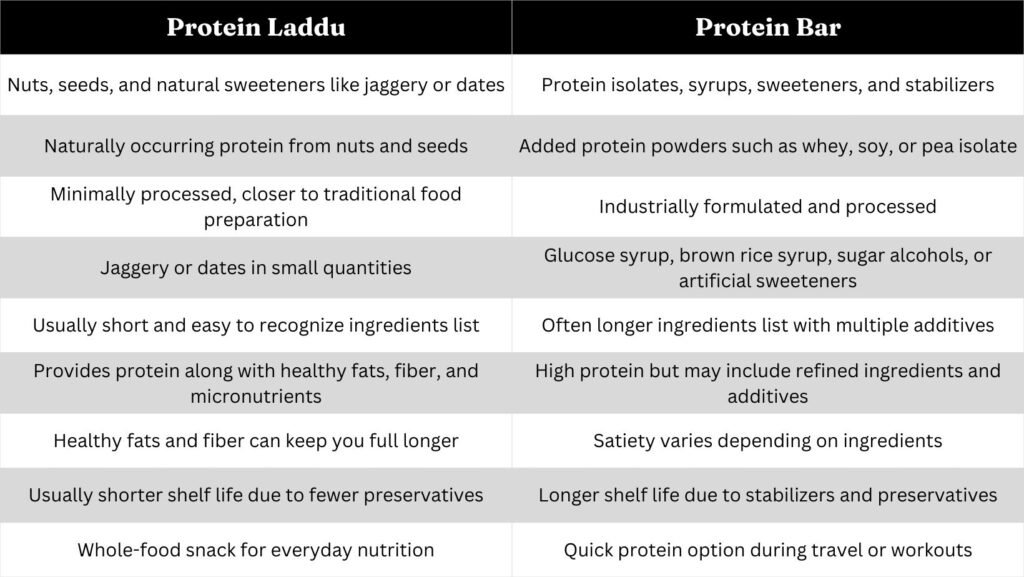
Most protein laddus are built around whole foods like nuts and seeds. Ingredients such as almonds, peanuts, pumpkin seeds, sesame seeds, or flaxseeds provide protein in their natural form along with healthy fats, fiber, vitamins, and minerals. Because these ingredients are minimally processed, they retain their full nutritional profile.
Protein bars, on the other hand, usually rely on protein isolates or concentrates. These are highly processed powders made by extracting protein from foods like whey, soy, or peas. While they do provide protein, the processing removes many of the naturally occurring nutrients that would normally be present in the whole food.
The binding ingredients also tend to be different. Protein laddus typically use natural binders such as a small amount of jaggery or dates to hold the mixture together. In contrast, protein bars often depend on syrups, emulsifiers, and stabilizers to achieve the desired texture and shelf stability.
As a result, a protein laddu is usually closer to a whole-food snack, while many protein bars are better described as engineered nutrition products.
Ingredient Quality: Whole Foods vs Ultra-Processed Ingredients
One of the biggest differences between protein laddus and protein bars is the type and quality of ingredients used.
Protein laddus are usually made with whole foods like nuts and seeds. Ingredients such as almonds, peanuts, pumpkin seeds, sesame seeds, and flaxseeds naturally contain protein along with healthy fats, fiber, and minerals. Because these foods are used in their natural form, they provide a broader range of nutrients beyond just protein.
Protein bars, in contrast, often rely on protein isolates or concentrates. These are highly processed powders extracted from sources like whey, soy, or peas. The extraction process concentrates the protein but removes much of the original food structure and some of the accompanying nutrients.
The ingredients that hold the snack together also differ. Protein laddus typically use natural binders like jaggery or dates, which help bind the nuts and seeds into a ball. Protein bars, however, often depend on glucose syrups, glycerin, emulsifiers, and stabilizers to maintain their texture and shelf life.
As a result, the difference often comes down to whole-food ingredients versus formulated ingredients. While both snacks can provide protein, protein laddus tend to deliver it in a form that is closer to traditional, minimally processed food.
Protein Content: Do Protein Bars Really Have More?
Protein bars are often marketed as high-protein snacks, with many products claiming 15–20 grams of protein per bar. At first glance, this can make them seem like the obvious choice for anyone trying to increase their protein intake.
However, most of this protein comes from added protein powders, such as whey isolate, soy protein isolate, or pea protein. These concentrated powders are specifically added to boost the protein number on the label.
Protein laddus usually contain less total protein per serving, but their protein comes naturally from ingredients like nuts and seeds. Peanuts, almonds, pumpkin seeds, and sesame seeds all contribute meaningful amounts of protein while also providing healthy fats, fiber, and micronutrients.
Another way to look at the comparison is protein density relative to the overall food. In protein bars, the protein is often an isolated ingredient added to a base made from syrups or fillers. In protein laddus, the protein is part of the food itself.
While protein bars may win on absolute protein numbers, protein laddus offer protein as part of a more balanced, whole-food nutritional package.
Sugar Sources: Jaggery vs Syrups and Artificial Sweeteners
The type of sweetener used is another important difference between protein laddus and protein bars.
Protein laddus are often sweetened with jaggery or dates, which are traditional natural sweeteners. Jaggery, for example, is less refined than white sugar and has a strong sweetness. Because of this, only a small amount is usually needed to balance the flavor of the nuts and seeds.
Many protein bars use a different approach. To achieve the right sweetness and texture, manufacturers frequently use glucose syrups, brown rice syrup, or other concentrated liquid sweeteners. These syrups help bind the bar together and give it a chewy texture.
Some protein bars also rely on sugar alcohols or artificial sweeteners to keep the sugar content low while maintaining sweetness. While this can reduce the sugar number on the label, these ingredients can sometimes cause digestive discomfort in sensitive individuals.
From a metabolic perspective, both snacks still need to be consumed in moderation. However, the key difference lies in how the sweetness is delivered—through small amounts of traditional sweeteners in a whole-food snack, or through multiple processed sweetening agents designed for shelf stability and texture.
Processing: Traditional Snack vs Factory Formulation
Another major point of comparison is how the two snacks are made.
Protein laddus are typically produced through minimal processing. Nuts and seeds are roasted or ground, mixed with a small amount of sweetener, and shaped into balls. The process is relatively simple and resembles traditional food preparation methods that have existed for generations.
Protein bars, in contrast, are usually formulated in industrial settings. The ingredients are carefully engineered to achieve specific goals—high protein content, long shelf life, stable texture, and consistent flavor. This often requires combining protein powders, syrups, stabilizers, and flavoring agents in precise ratios.
Because protein bars are designed to sit on shelves for long periods, they frequently include additives that help maintain texture and freshness. These can include emulsifiers, humectants, and preservatives.
Protein laddus generally rely more on the natural stability of nuts and seeds, and their shelf life is often shorter because fewer stabilizing ingredients are used.
This difference highlights a broader contrast: protein laddus resemble traditional, minimally processed foods, while protein bars are usually engineered products designed for convenience and long storage.
Satiety and Energy: Which Snack Keeps You Full Longer?
A good snack doesn’t just provide nutrients—it should also keep you satisfied until your next meal.
Protein laddus often contain a combination of protein, healthy fats, and fiber from nuts and seeds. This combination slows down digestion and helps release energy gradually. Because fats and fiber digest more slowly than simple carbohydrates, they can contribute to a longer feeling of fullness.
Protein bars can also provide satiety because of their protein content, but the overall effect depends heavily on the rest of the ingredient composition. Some bars contain significant amounts of syrups or refined carbohydrates that may digest more quickly.
In addition, the natural fats present in nuts and seeds play an important role in satiety. These fats not only provide sustained energy but also help make the snack more satisfying in smaller portions.
As a result, a snack like a protein laddu often delivers steady energy rather than a quick spike and drop. This can be particularly useful for people looking for a mid-day snack that keeps them full during work, travel, or between meals.
Ultimately, both snacks can provide energy, but their macronutrient balance can influence how long that energy lasts.
Clean Label: Understanding What You’re Actually Eating
In recent years, many consumers have started paying closer attention to ingredient lists. This has led to the growing popularity of foods with a clean label, meaning fewer ingredients and more recognizable ones.
Protein laddus typically have shorter ingredient lists. A simple recipe might include nuts, seeds, jaggery, and perhaps spices or cocoa. Because the ingredients are familiar and easy to recognize, it’s usually clear what the snack is made from.
Protein bars often have longer ingredient lists, sometimes containing 10–20 different components. These may include protein isolates, multiple sweeteners, stabilizers, flavorings, and preservatives. While these ingredients are approved for food use, they can make the product feel more complex and less transparent to the average consumer.
For many people, the appeal of a clean label lies in simplicity and familiarity. Foods that contain recognizable ingredients can feel easier to trust and understand.
This doesn’t automatically make one snack perfect and the other unhealthy, but it does highlight an important difference: protein laddus often resemble simple recipes, while protein bars tend to be carefully formulated packaged foods designed for consistency and long shelf life.
The Verdict: Protein Laddu vs Protein Bar
Both protein laddus and protein bars are designed to solve the same problem: providing a convenient source of protein in a portable snack. For people with busy lifestyles, gym routines, or long workdays, having an easy protein option can make it much easier to meet daily nutrition goals.
Protein bars often stand out for their high protein numbers and long shelf life. Protein laddus, however, take a different approach. Instead of relying on isolated protein powders and multiple additives, they typically deliver protein through whole ingredients like nuts and seeds. These ingredients not only provide protein but also contribute healthy fats, fiber, and micronutrients that make the snack more nutritionally balanced.
When you compare the two, the difference often comes down to how the nutrition is delivered. Protein bars are usually a formulated product designed for convenience and high protein numbers, while protein laddus are closer to a traditional whole-food snack that naturally contains protein and several micronutrients.
For many people looking for a snack that feels both nutritious and familiar, a well-made protein laddu can be a simple and satisfying alternative to the typical protein bar.

2 Comments